
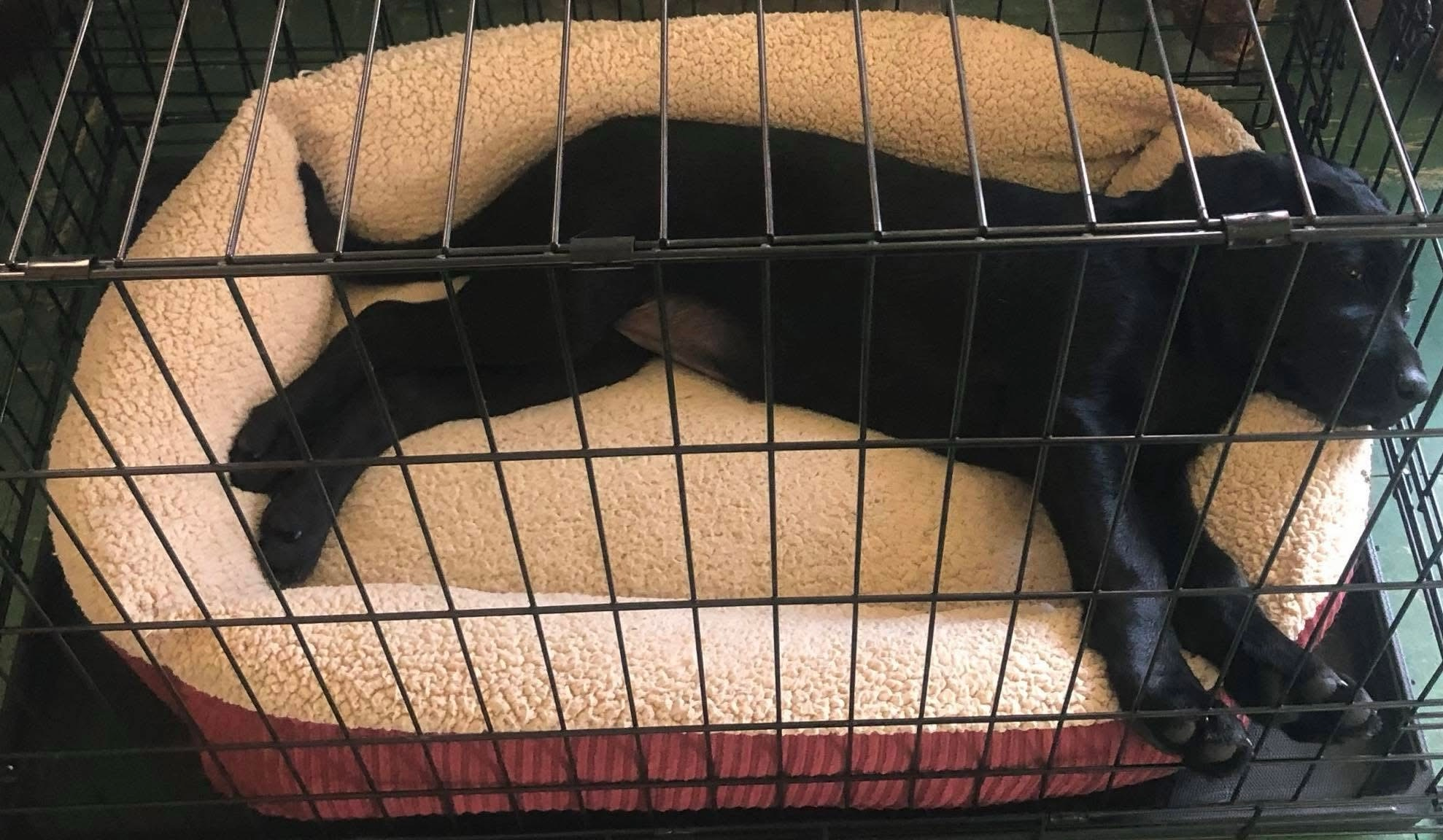
Crate training doesn’t have to be a stressful experience full of crying puppies and sleepless nights. All three of my girls were crate trained from the day I brought them home at 7–8 weeks old — and not one of them feared or hated their crate. In fact, they loved it, and that made all the difference.
🏡 Setting Up the Crate the Right Way
At night, keep the crate in your bedroom so your puppy can see and hear you — this builds security. Add a warm blanket, safe chew-proof toy, or small dog bed (only if you’re supervising). During the day, move the crate to a central spot in the house so your puppy feels included in daily life. When leaving the house, remove blankets or toys for safety. Choose a crate with a divider so it can grow with your dog. A puppy should have just enough room to stand, turn around, and lay down comfortably — this helps with potty training. If the crate is too large, they may use one side as a bathroom — the divider prevents that.
🎉 Introducing the Crate as a Happy Place
Never use the crate as punishment. It should always feel safe and positive. Leave the crate door open during play, and when your puppy wanders in on their own, praise gently and reward. Hide small treats inside when they’re not looking — let them discover them on their own. Use a calm command like “House” when guiding them in. Reward every time they follow it. Start on Day 1 — consistency from the first night builds trust. I kept the crates up and used them daily for the first two years, until full trust was earned.
🌙 Night Routine & Potty Break Strategy
Never wake a sleeping puppy — if they need to go out, they will let you know. When they bark or whine in the night, take them straight outside, calmly say “Go potty,” praise quietly, and go straight back inside to the crate — no play, no excitement. They may whine for a few minutes afterward, but if you ignore it, they’ll settle and go right back to sleep.
⏱ Daytime Crate Timing Rule
A good guideline:
🕒 1 hour in the crate + how many months old they are.
Example: An 8-week-old puppy (2 months) should only be in the crate for 3 hours max, then out for a 30-minute break.
If you work full-time, a pet sitter or family member is necessary for healthy crate training — puppies can’t hold it all day.
🚫 Crate Training Don’ts (From Real Life Experience)
🚫 Never use the crate as punishment. 🚫 Never feel guilty for using a crate — it keeps puppies safe from dangerous chewing (cords, batteries, socks, etc.). 🚫 Don’t let anyone bang on the crate or hype the puppy up while inside — this creates anxiety. ✅ Dogs are natural den animals — when used lovingly, the crate becomes their peaceful retreat, not a cage.
🐾 Real Crate Moments From My Pack
Olive would proudly carry her bone into her crate because she knew it was her private chewing zone — no one bothered her there. Nellie tried to sass me at bedtime, but one treat in hand, and she trotted into her crate without a single argument. Mya, even as a puppy, would put herself to bed. If she got tired during play, she’d quietly walk into her crate, curl up, nap for an hour or two, and then return for round two of playtime.
Each of them made the crate their space, and that’s the goal — a den, not a timeout corner.
💛 Final Thought
Crate training isn’t about control — it’s about safety, trust, and peaceful routine. If you’re calm and confident, your puppy will learn to feel safe there too. A well-used crate becomes a sanctuary, not a prison.


When introduced with patience and positivity, the crate becomes a cozy retreat your puppy happily curls up in — not a place they’re sent to.